





Women's Rights
It has been said that well-behaved women seldom make history. If this is true, then the Finger Lakes has a long “her-story” of misbehaving.
It has been said that well-behaved women seldom make history. If this is true, then the Finger Lakes has a long “her-story” of misbehaving.
Begin at the exact spot where one of the most consequential courtroom dramas in American history unfolded. On November 18, 1873, Susan B. Anthony stood before a packed courtroom inside this very building and was convicted of the "crime" of voting in the 1872 presidential election — an act she performed with deliberate, defiant intent to challenge the law.
Anthony had traveled to Canandaigua from Rochester specifically to face trial here, in Ontario County. Judge Ward Hunt denied her the right to speak or address the jury, then directed the jury to return a guilty verdict — a move widely criticized as a denial of due process. When asked if she had anything to say before sentencing, Anthony delivered a four-minute speech that became one of the most electrifying courtroom statements in American history: "I shall never pay a dollar of your unjust penalty." She never did.
The exterior of the current Ontario County Courthouse (rebuilt in 1857 and expanded since) is a dignified starting point for the day. Interpretive signage nearby marks the location. The Ontario County Historical Society, just steps away, holds primary source materials from the trial.
A short stroll up Main Street brings you to this outstanding and completely free local museum. The Ontario County Historical Society holds collections documenting the women's suffrage movement in Ontario County in exceptional depth including materials from the Anthony trial, records from local suffrage organizations, and archival photographs of the women and men who organized here in the 19th century.
The research room is a gem for anyone who wants to go deeper. Staff are knowledgeable and welcoming. Even a 30-minute visit yields insights that reframe what you'll see at the courthouse and at sites further west in Seneca Falls. Pick up one of their local history publications before you leave.
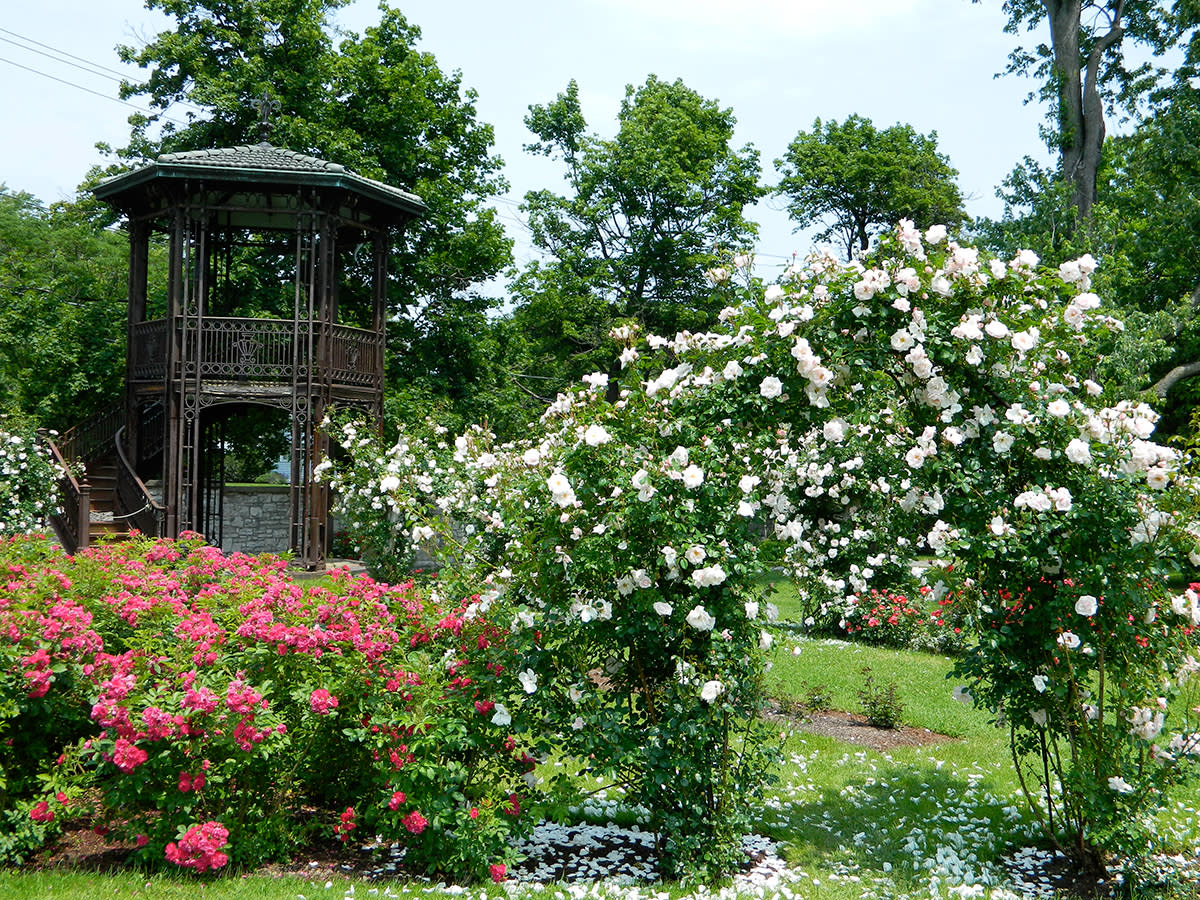
Walk or drive five minutes north to Sonnenberg, one of the most spectacular Victorian estates in the Northeast, and a monument to the ambition and philanthropy of Mary Clark Thompson. When her husband Frederick Ferris Thompson died in 1899, Mary didn't retreat. She expanded. She commissioned nine formal gardens across 50 acres and became one of the region's most significant philanthropists, endowing hospitals, cultural institutions, and public spaces across the Finger Lakes.
Her legacy at Sonnenberg (Japanese garden, Italian garden, rose garden, greenhouse conservatory) is extraordinary and unmistakably her own vision. The Mansion itself, guided tours of which are offered seasonally, illustrates the life of a woman who wielded wealth and influence on her own terms at a time when few could. Wander the grounds, linger in the gardens, and recognize the confident, clear eye that designed this place.
A lunch break and a breath of lake air before heading west. The Canandaigua City Pier is a lovely spot to reflect on the morning's sites over a picnic or a sandwich from one of the nearby Canandaigua restaurants. The lakefront is central to Canandaigua's identity and a natural pause point on the journey. Several restaurants along Lakeshore Drive offer casual lakeside dining.
Twenty minutes west of Canandaigua, just off US-20, sits the beautiful lakeside campus of Hobart and William Smith Colleges, a landmark that deserves far more attention than it typically receives. On the grounds stands a marker commemorating one of the most consequential moments in the history of medicine and women's rights: the graduation of Dr. Elizabeth Blackwell.
In 1847, Blackwell applied to medical schools across the country and was rejected by every one. Geneva Medical College, the institution that would eventually become Hobart and William Smith Colleges, agreed to let its 150 male students vote on her admission. They voted yes, reportedly as a joke. She was not joking. On January 23, 1849, Elizabeth Blackwell received her medical degree from Geneva Medical College, becoming the first woman in the United States, and the first in the modern world, to earn a Doctor of Medicine degree. She graduated first in her class.
The college's dean initially required her to sit apart from the male students during public demonstrations; she refused and sat with her class. Her presence transformed the room, and her diploma changed what was possible. The campus marker honors this moment, and the surrounding grounds, set on Seneca Lake, are as beautiful as the history is significant. Allow 20–30 minutes to walk the campus and find the memorial.
Drive 35 minutes west along US-20 into Seneca Falls and the heart of American women's history. The Women's Rights National Historical Park is the national monument to the movement and it centers on Seneca Falls, where on July 19–20, 1848, the first women's rights convention in history was held by a small group that included Elizabeth Cady Stanton, Lucretia Mott, Frederick Douglass, and nearly 300 attendees.
The visitor center is masterfully done and completely free. Exhibits trace the long arc of the movement from the 1840s to the passage of the 19th Amendment in 1920–72 years of organized, unrelenting effort by multiple generations of activists. The interpretive film shown in the theater is deeply moving. Allow at least 90 minutes here; it rewards attention.
Adjacent to the visitor center is the Wesleyan Chapel, the actual building where the 1848 convention took place and where the Declaration of Sentiments was debated and adopted. What survives of the original structure is preserved behind protective material; Park Rangers give interpretive talks inside that bring the moment vividly to life.
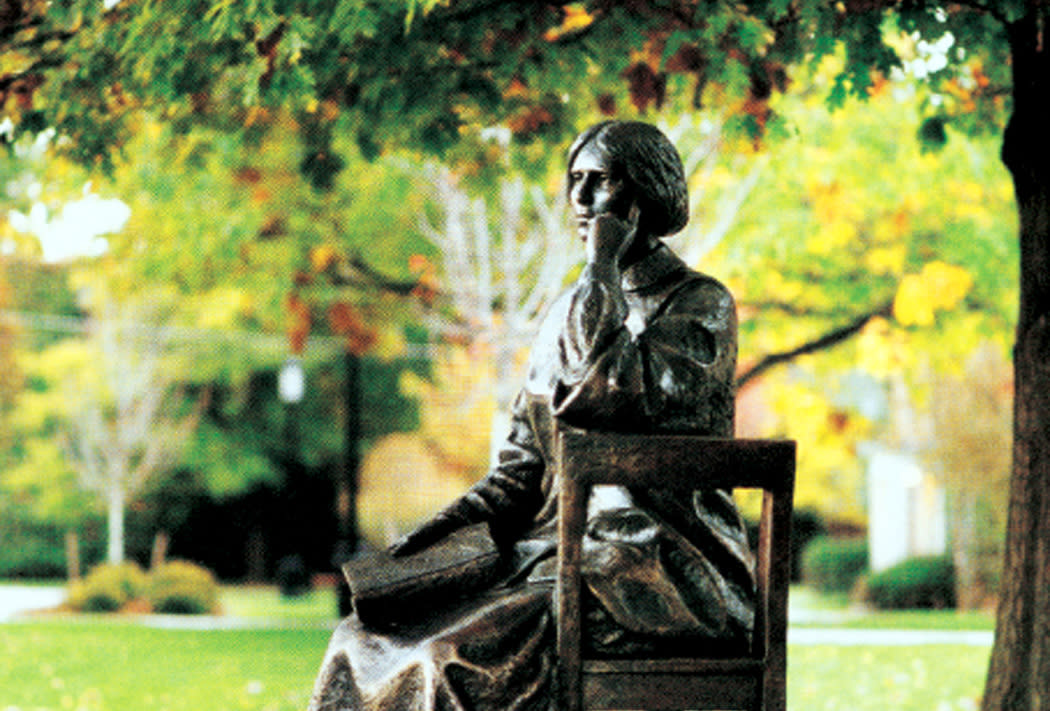
A five-minute walk from the visitor center brings you to the house where Elizabeth Cady Stanton lived with her husband Henry and their children during the years she organized the 1848 convention and wrote many of the foundational texts of the women's rights movement. It was in this house–managing a household of seven children, with limited help–that Stanton forged her analysis of women's oppression into something philosophical and political.
The house is part of the National Park and guided ranger tours illuminate how Stanton's domestic circumstances shaped her arguments. Standing in the rooms where she wrote the Declaration of Sentiments and her later speeches is a clarifying experience: the women who changed history were doing laundry at the same time.
Close the day at the National Women's Hall of Fame, America's oldest nonprofit dedicated to celebrating the achievements of women, founded in 1969 and now housed in a beautifully restored 19th-century Seneca Falls knitting mill on the Erie Canal. The Hall inducts honorees annually across fields from science and arts to athletics and public service; the current exhibits span centuries of American women's achievement.
The building itself, a mill where women once worked for wages far below their male counterparts, has been transformed into a space that honors what those same women and generations after them fought to change. The gift shop carries a thoughtful selection of books, art, and gifts. Allow 45–60 minutes.