



Ontario County offers a powerful window into key moments that shaped the United States. From Seneca heritage to the fight for women’s rights and the impact of the abolitionist movement, its history is rich and still felt today.
Native American Origins
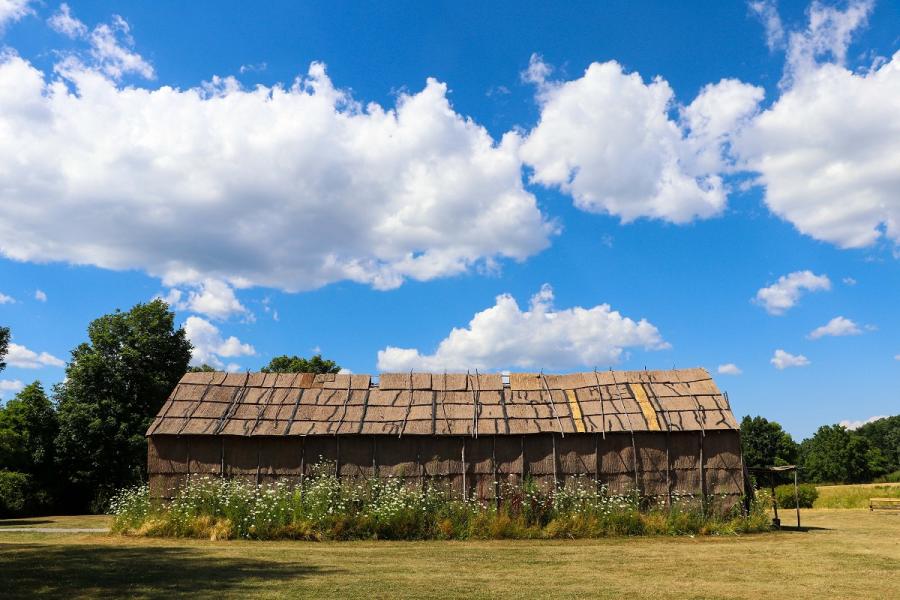
Hundreds of years before Columbus set sail for the continent, Ontario County was home to the Seneca Iroquois—also known as the "People of the Great Hill" due to the location of their first village. They built their "peace town," Ganondagan, in the rolling hills between Victor and East Bloomfield. With more than 150 bark buildings and 4,500 residents, it was one of the largest and most vital 17th-century Seneca towns until its destruction in 1687.
Today, this location is home to the Ganondagan State Historic Site (7000 County Road 41, Victor, N.Y.), where everyone can learn about the Seneca people's history, art, and contributions to society. "Can’t-miss" experiences include Ganondagan’s full-size Seneca Bark Longhouse, which is fully furnished to reflect a typical Seneca family home from the late 1600s, and the Seneca Art & Culture Center, featuring interactive exhibits and artistic displays. Additionally, the grounds surrounding the center include two interpretive trails that educate visitors on the importance of nature and sustainability within Seneca culture.
The American Revolution
During the American Revolution, Seneca warriors and Loyalist Rangers used villages at Canandaigua, Honeoye, Naples, and Geneva as staging areas for frontier raids. General John Sullivan, acting on Washington’s orders, retaliated for those raids by devastating the Seneca towns in 1779. In the years following the Revolution, Ontario County was settled quickly after being purchased from the Native American people by Massachusetts speculators Oliver Phelps and Nathaniel Gorham.
Established in 1789, Ontario County is famously known as the “Mother of Counties,” as its original territory once stretched from Seneca Lake all the way to Lake Erie. This massive expanse was eventually divided to form 14 separate counties, including Monroe, Wayne, and Erie, marking the region as the essential gateway to the American West following the Revolutionary War. Today, Ontario County includes 2 cities, 16 towns, 8 villages, 2 colleges, and 9 school districts.
The Pickering Treaty
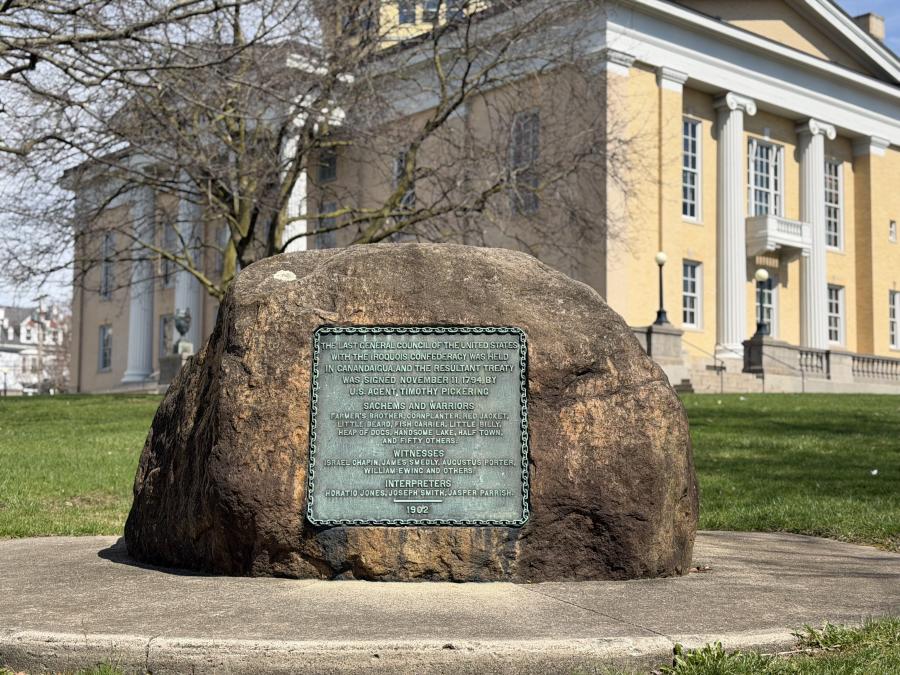
On November 11, 1794, the young United States and the Haudenosaunee Confederacy (Six Nations) entered into a historic treaty of peace and friendship. Known as the Canandaigua Treaty—or the Pickering Treaty—this agreement was a critical diplomatic turning point following the Revolutionary War, a conflict that had deeply fractured the region and displaced many Indigenous communities.
The treaty served several vital purposes that continue to resonate today:
-
Affirmation of Sovereignty: It recognized the Haudenosaunee as sovereign nations, rather than subjects of the United States.
-
Land Rights: It clearly demarcated the lands reserved for the Six Nations (Seneca, Cayuga, Onondaga, Oneida, Mohawk, and Tuscarora), with the U.S. pledging to "never claim the same, nor disturb" their free use and enjoyment.
-
Conflict Resolution: Article VII specifically outlines a process for addressing grievances between individuals of both nations, involving the executive branch to ensure peace was maintained through diplomacy rather than retaliation.
-
Supreme Law: Bearing the signature of George Washington, the treaty was ratified by the U.S. Senate in January 1795. Under the U.S. Constitution, such treaties are recognized as the supreme law of the land.
Every November 11, members of the Six Nations gather in Canandaigua, New York, to commemorate the signing. This is more than a historical reenactment; it is a "polishing of the Silver Covenant Chain"—a symbolic rededication to the "perpetual peace and friendship" promised over two centuries ago. To this day, the U.S. government continues to fulfill a specific provision of the treaty by delivering "annuity cloth" (muslin) to the Haudenosaunee, a tangible reminder that the agreement remains active and legally binding.
Women Who Made History
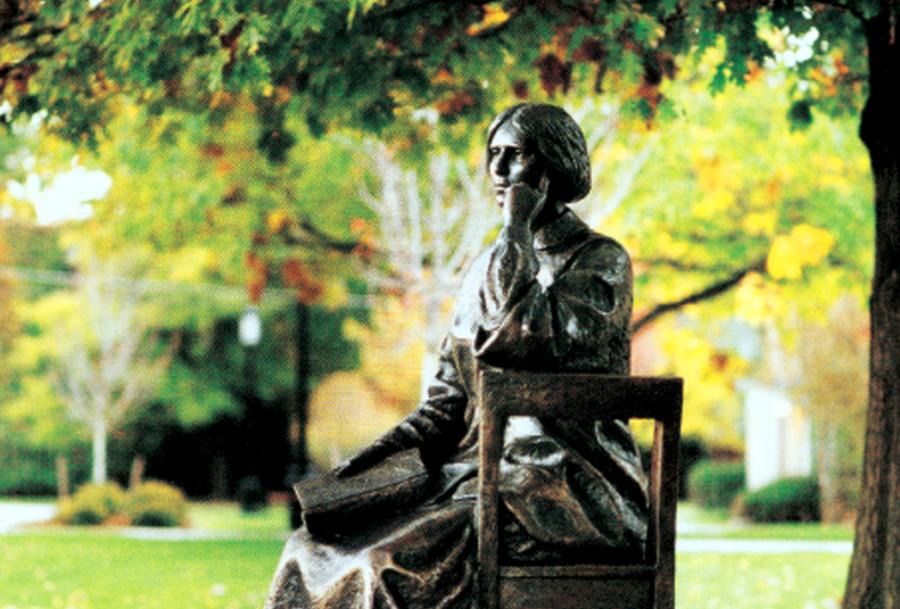
The Finger Lakes region is the heart of women’s history in the United States. Ontario County was home to trailblazers such as Jikonsaseh, the "Mother of Nations," who helped unite the Haudenosaunee Confederacy, redefined leadership, and sparked global social change. From the 1873 suffrage trial in Canandaigua where Susan B. Anthony defiantly fought for the vote, to the groundbreaking climate discoveries of Eunice Newton Foote who first identified the greenhouse effect, the county holds the stories of women who shattered political, scientific, and professional barriers.
Whether you're walking the halls where Elizabeth Blackwell became the first female physician in the U.S., or visiting the Geneva home where Sarah Hopkins Bradford immortalized the legacy of Harriet Tubman through her writing, these historic sites offer a powerful look at resilience. Discover how these five extraordinary women shaped our nation and why their impact still resonates across the Finger Lakes today.
Read more here to explore the historic sites and legacies of these pioneers.
The Farmington Quaker and the Underground Railroad
Originating in mid-17th-century England, the Society of Friends—commonly known as Quakers—built their foundation on the belief that all individuals possess equal spiritual worth, regardless of race, gender, or background. These convictions transformed the Finger Lakes into a powerhouse of social reform and, in 1796, they established the Farmington Friends Church, the first house of worship west of Utica, which quickly became a strategic hub for the abolitionist and women’s rights movements.
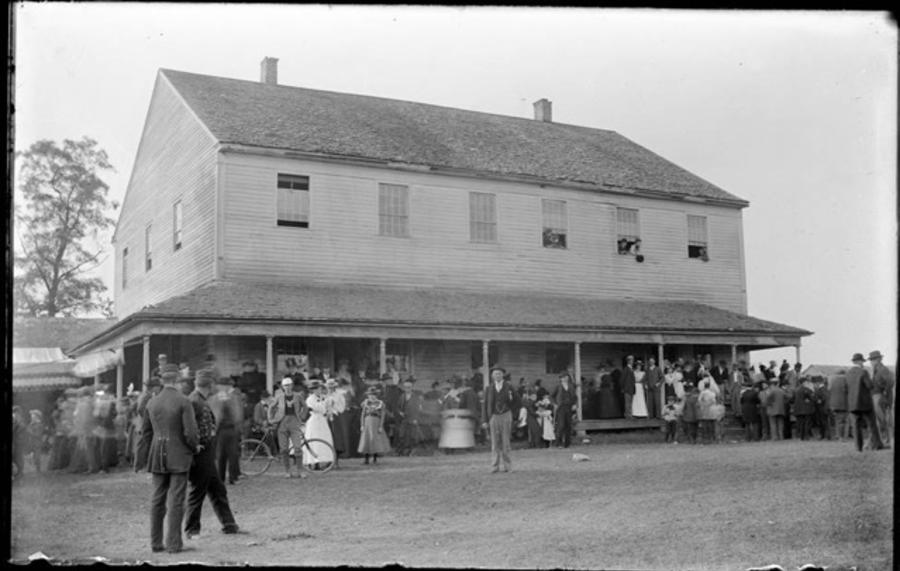
The 1816 Farmington Quaker Meetinghouse (160 County Road 8, Farmington, N.Y.), located in Farmington, New York, was built in 1816 and served as a central place of meetings for social reforms until it was sold in 1927. During this period, it hosted Quaker meetings and acted as a hub for abolitionist, women's rights, and Native American rights activism.
The community in Ontario County took direct action by operating safe houses for freedom seekers as part of the Underground Railroad. Notable figures like Austin Steward, who escaped slavery in 1815 and later became a prominent Black leader, found refuge in Farmington for four years.
More Ontario County History


Brave Women in the Finger Lakes
Explore more of the women's history and women-owned businesses throughout Ontario County!