



1. Ganondagan State Historic Site
7000 County Road 41, Victor · (585) 924-5848 Hours: Wed–Sat 9 a.m. – 4 p.m.; Closed Sun–Tue · Admission charged for museum; trails freeBegin here, the most significant Seneca site in New York State. In the 17th century, Ganondagan was a thriving town of several thousand people and the largest Seneca community in the region. In 1687 it was destroyed by French forces under the Marquis de Denonville, but its spirit endures in the trails, meadows, and reconstructed longhouse that stand today.
Start with the award-winning Seneca Art & Culture Center, whose FdM:Arch-designed building holds extraordinary collections of wampum, ceramics, beadwork, and oral history. The 22-minute film The Worlds Between Two Worlds, winner of the CINE Golden Eagle Award, tells the Seneca creation story through dance, music, and traditional imagery. Allow at least an hour inside.
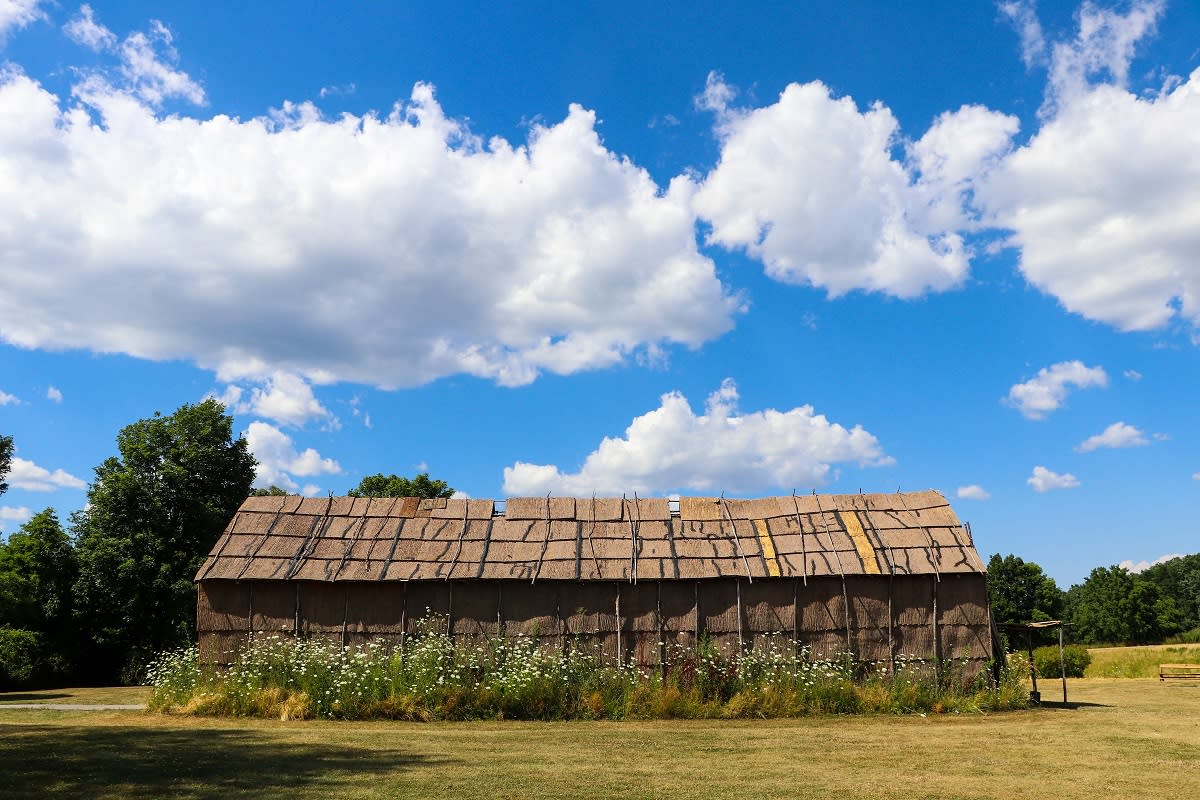
Then climb the interpretive trail to the full-scale Bark Longhouse: a 65-foot reconstruction showing how extended Seneca families lived, cooked, and gathered. The three walking trails weave through meadows where Seneca grew the Three Sisters, corn, beans, and squash, and offer broad views over the landscape they once called home.
If your visit coincides with one of Ganondagan's signature events, plan to return in the evening or extend your day: the Indigenous Dance & Music Festival (late July) brings performers from nations across North America and is one of the most joyful and accessible celebrations of Indigenous culture in the Northeast. The site also hosts the Ganondagan Film Festival and the annual Winter Walk.
Throughout the summer, evening programs of storytelling, lacrosse demonstrations, and guided history walks are offered on-site. Check the Ganondagan calendar before your visit and plan your day around a program if at all possible.
2. The Road South: Seneca Trail
NY Route 332 southbound toward CanandaiguaThe road you drive south from Victor into Canandaigua follows one of the oldest travel routes in the region, the Seneca Trail, part of the ancient path network the Haudenosaunee used to traverse their territory from the Hudson River to the Great Lakes. As you drive, note the rolling hills and clear sightlines. This corridor was chosen and shaped by generations of Seneca travelers long before European settlement.
Pull over at the crest of the hill just south of Victor to take in the view toward Canandaigua Lake. The Seneca knew this as Kanadesaga ("the place of new settlements"), and the lake at its heart is woven into the oral traditions of the nation.
3. Ontario County Historical Society
55 N Main Street, Canandaigua · (585) 394-4975 Hours: Tue–Fri 10 a.m. – 4:30 p.m.; Sat 11 a.m.– 3 p.m. · Free AdmissionA short lunch stop in Canandaigua leads naturally to this excellent, free museum. The Ontario County Historical Society holds significant collections related to the Seneca Nation's presence in Ontario County, including artifacts, maps, and documents from the 1794 Treaty of Canandaigua, one of the most important treaties ever signed between the United States government and the Haudenosaunee Confederacy.
The Treaty of Canandaigua (also called the Pickering Treaty) affirmed peace between the young U.S. and the Six Nations, acknowledged Seneca sovereignty, and established boundaries. Every year on November 11, the Seneca Nation holds a commemoration ceremony in Canandaigua to affirm the treaty's ongoing significance, a ceremony open to the public and a profound way to visit if you can time your trip around it.